
Introduction
From July 2013-March 2014 I was teaching at a private school in Thailand, developed to provide quality education for the 25 kids who live at the Baan Fah Sighy children’s home. The home receives help through the Effective Aid ministry and through some other Australian-run ministries, so there is a lot of English influence and many English books that have been donated to the library. I lived on campus with the 25 kids, their mother, the home staff, the school’s headmistress, and my cousin, who is the school’s primary English teacher. When I was there, the school had around 100 students, from nursery to grade 5. I taught English to nursery and kindergarten students and music and guided library time to grades 1-5. While I was there I also revamped the library to make it more usable for both students and teachers. A few notes about the school: while it is a thriving private school, it has nowhere near the financial resources that a similar school would have in the U.S. It also operates for the most part sans-technology: there is a computer lab for the students to learn typing and word processing; and one computer and printer for staff use. All school and home staff shared 1-2 USB internet sticks, that were patchy at best. All of the children spoke Thai as their first language, and English skills varied from nonexistent to proficient.
The Library Journey

before
This is what the library looked like when I arrived. Books were loosely (and often erroneously) organized by language (English, Thai, English & Thai) and reading level, designated by colored tape. Most of the children did not know what the colors corresponded to.

books at a Public Library in Chiang Mai
In my visit to a public library in Chiang Mai, I found that colored tape is a common method for organization in Thai libraries. I could not figure out what the colors meant. The librarian was very friendly but her English was limited. She did tell me that while you need special training to be a librarian, a master’s degree is not required.
The tent-like shelving would not have allowed much flexibility in organization, in addition to the big problem of children hiding underneath and behind them. I encouraged the purchase of new shelving (which I did not have a part in selecting, although I think that the school director bought the best she could find). The two large white shelves went to classrooms and I went about sorting through the books and trying to decide what the best system would be.

note the legs of a “helper” on the left
With no technology, no history of subject-based organization, and a multi-lingual collection, I had a big challenge on my hands. Additionally, I knew that once I left the system had to be pretty easy for someone else to maintain. I read a few blogs, considered cataloguing the entire collection on my own personal computer, and then realized that I just needed to start with the material and with my users. I spent time with each class talking about what they wanted to read in the library (which boiled down to mostly superhero books and dinosaur books), recalled previous library behavior, and observed the reading habits of the students I lived with. I stripped the old colored tape and put a sticker with the school’s name on every book (I had some help with this part but I often found myself re-aligning the ones done by the students). It seemed most important to me to separate the nonfiction from the fiction, or as I called them, the “storybooks” from the “fact-finding” books. I also separated out the fairy tales, folk tales, myths and legends, since these were very popular. I organized the young children/baby books by topic to make it easier for teachers to find what they need (only grades 1-5 go to the library), and labeled them accordingly. The fairy tales (+) section got a frog prince spine label, fact-finding books received a magnifying glass, and I alphabetized the English picture books and stickered them with the first letter of the author’s last name. While I was able to fit the Thai language books into the major subcategories, I was unable to organize within them. I had hoped to get help arranging them but it was not a priority at our busy school.

two of the baby/toddler sections
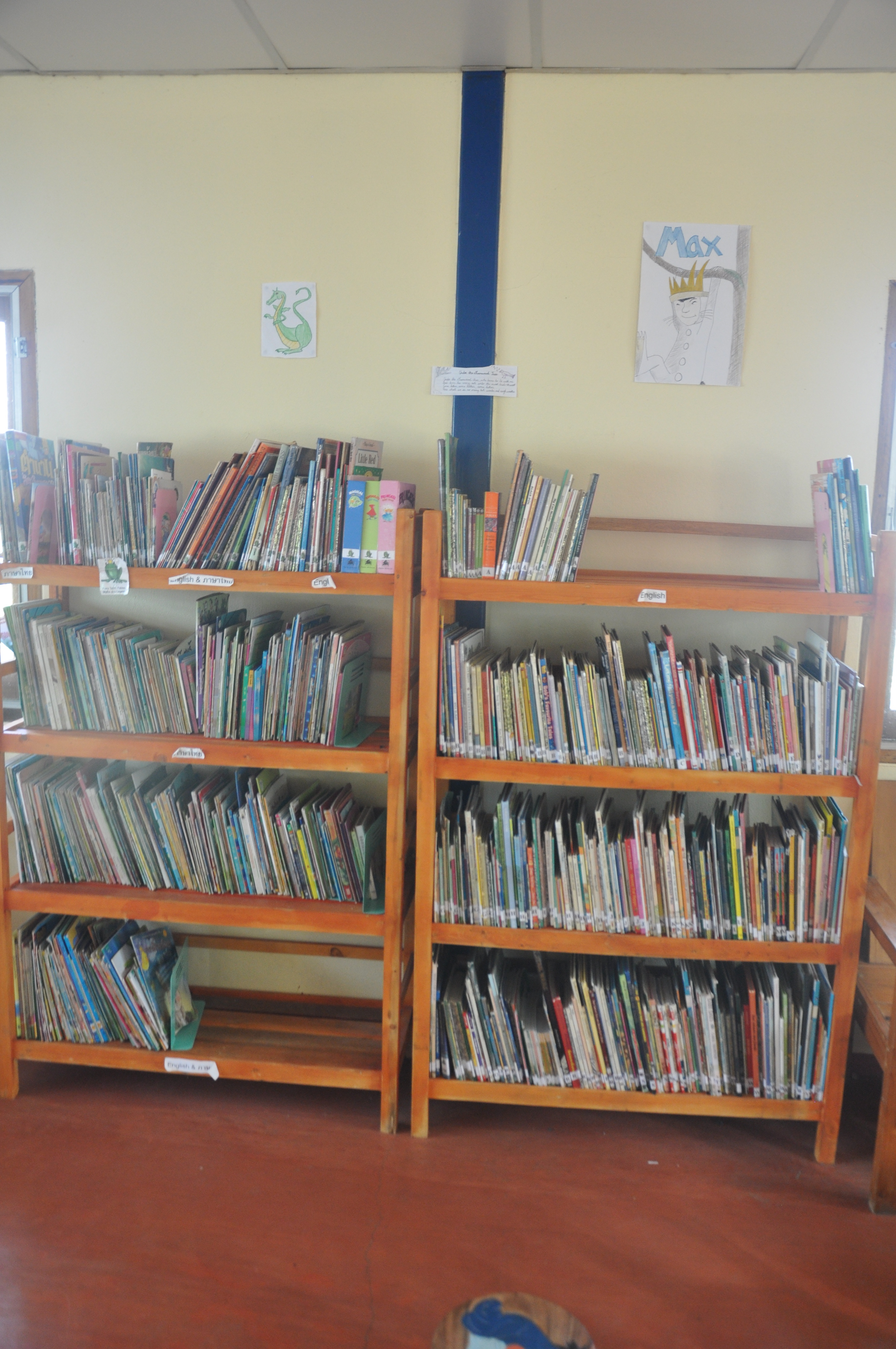
storybooks
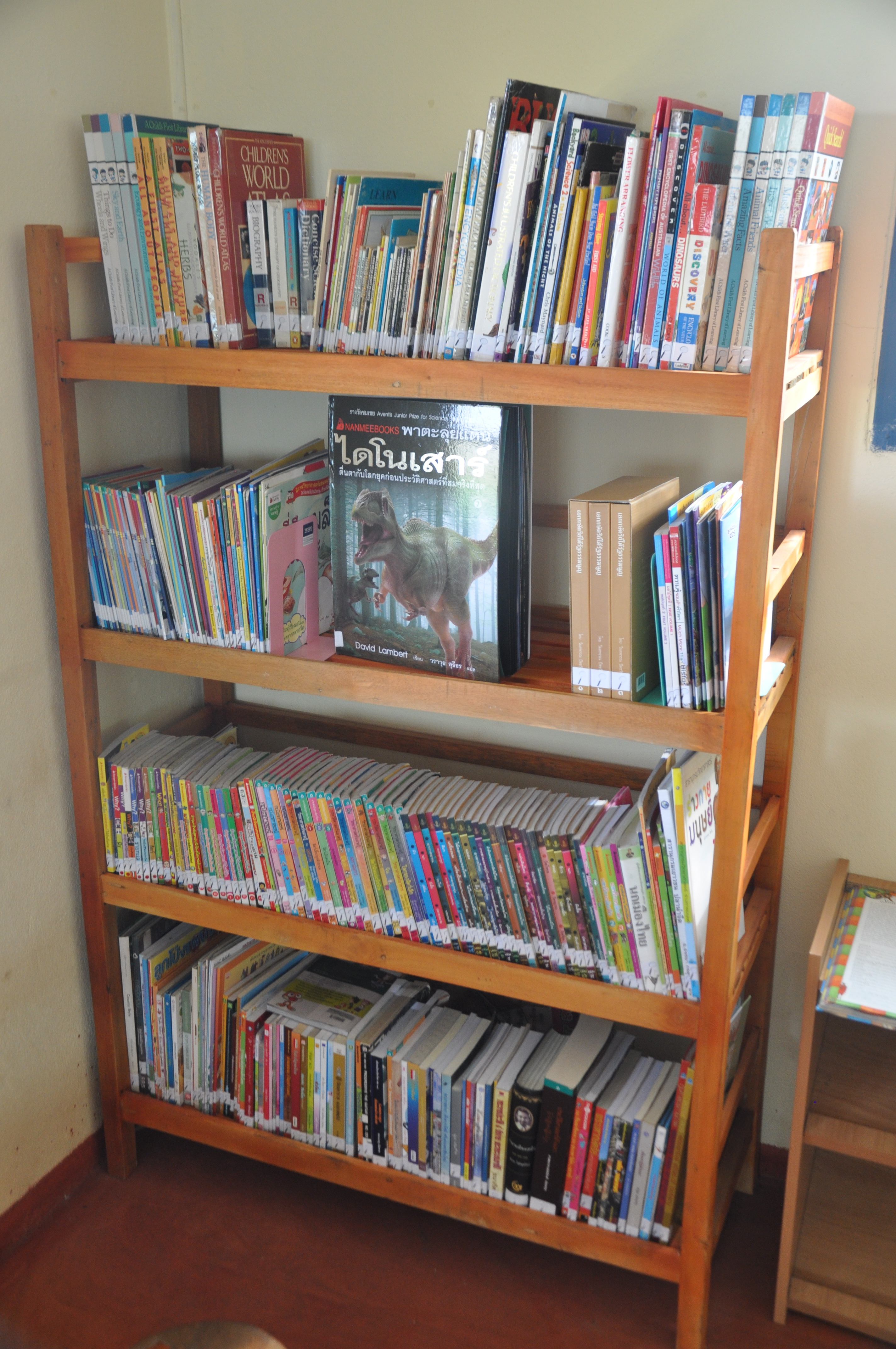
fact-finding books
I was very pleased to see that my system made it easy for kids to find the type of books they wanted. The fact-finding section was particularly popular. Many students also went directly to the fairy tale section. Some were just glad that they didn’t have to dig past all the English picture books to find a good Thai one.

the reorganization of the library opened up the space, made it more friendly and usable
I wish I could say that this was a perfect project. I was unable to finish my work. Though I was able to group the early readers and chapter books together by language, I did not accomplish my grand dreams of organizing them by reading level. I also did not make it to the teacher’s resources. I asked for guidance in this area, since most of the books were in Thai, but received none.
In order to help the sustainability of this system, I created a library guide for English-speaking teachers and volunteers. I also left digital files of all the images I used and my label templates.
Collection Development
I was not given a budget for purchasing new materials, but I found myself spending a lot of my own money buying books that were requested or that I thought the kids would like. As I mention in the library guide donation section, there was a scarcity of chapter books in Thai. I was passionate about connecting readers with books, so I used a funding page online and the help of some social media and word-of-mouth to raise money for my enterprise. The books I bought were very popular with both home kids and the wider school population. I did not have selection resources for Thai language books, so I mostly stuck with: a. titles I was familiar with that had been published in English (the Percy Jackson series was a huge hit); b. bookstore staff recommendations (for instance I held up two awesome-looking dinosaur books and asked the bookseller which was better); and c. continuing fact-finding comics series that were already popular in the library.
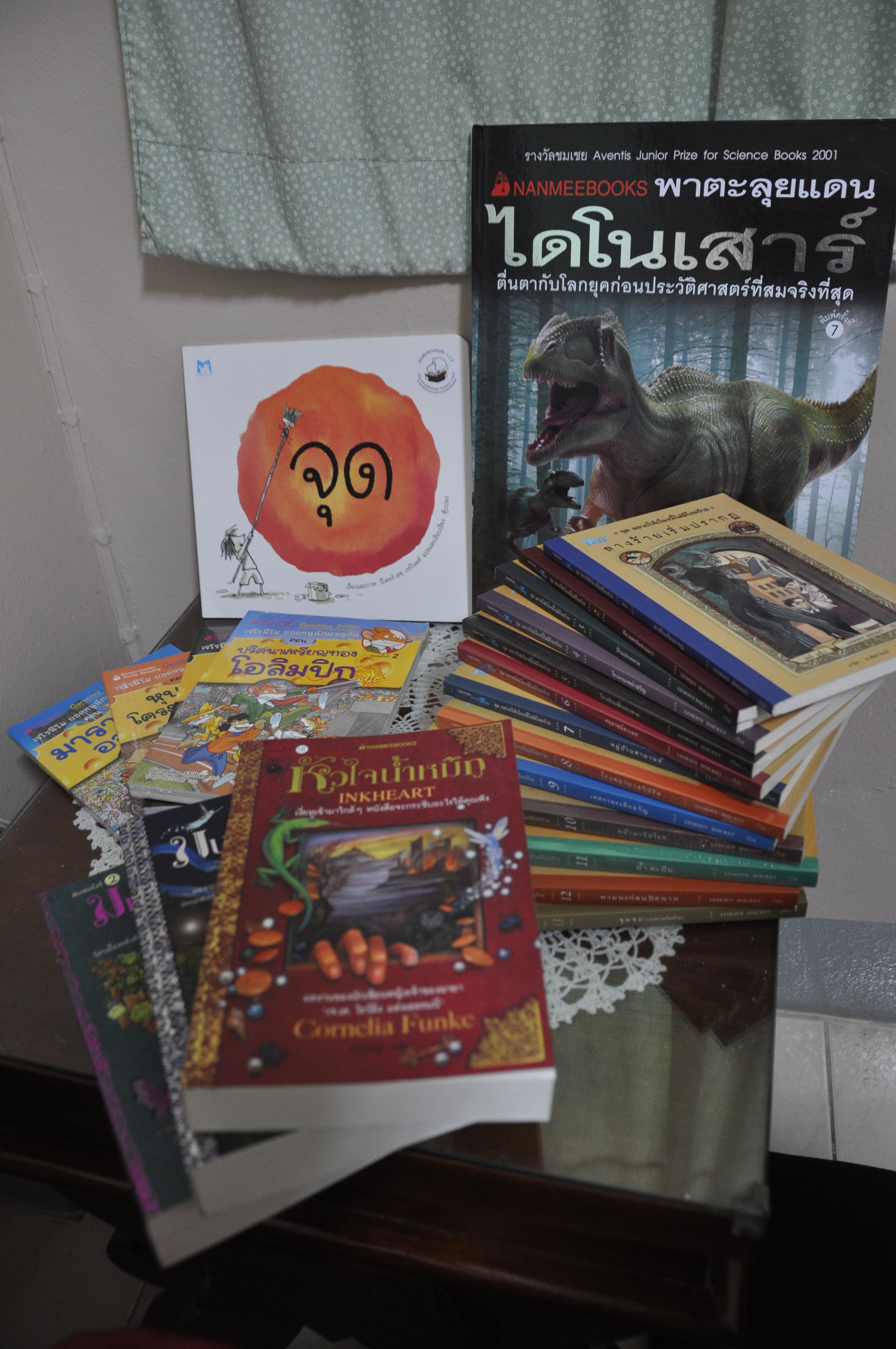
one of my bigger hauls
 Angela Barratt